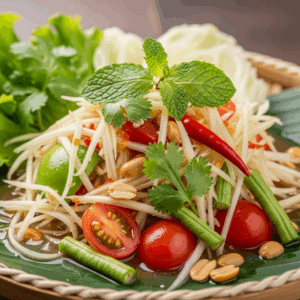
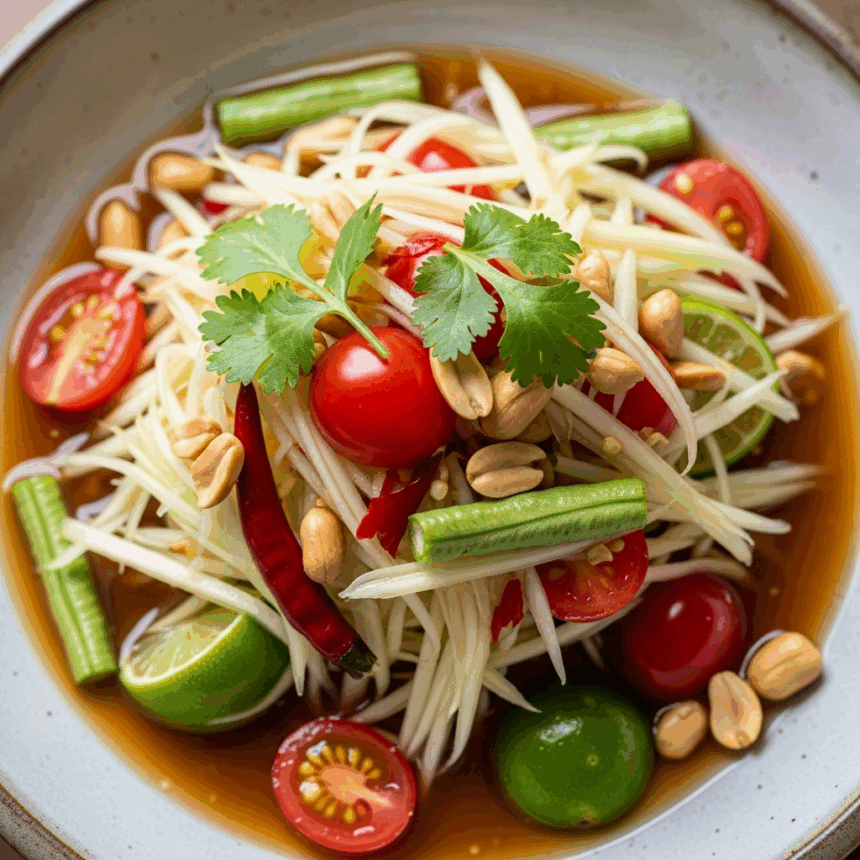
In the vibrant tapestry of Thai cuisine, few dishes capture the essence of bold flavors and cultural heritage quite like Som Tum, the iconic green papaya salad. This zesty, crunchy masterpiece is more than just a salad-it’s a sensory journey through Thailand’s bustling street markets, sun-soaked countryside, and centuries-old culinary traditions. Behind its deceptively simple appearance lies a symphony of tastes: the fiery heat of chilies, the tang of lime, the sweetness of palm sugar, and the umami punch of fermented crab or fish sauce. Join us as we peel back the layers of Som Tum’s secret ingredients, regional variations, and the artful techniques that have made this humble dish a global sensation and a proud emblem of Thai gastronomy.
som Tum Secrets: Exploring Thailand’s Iconic Green Papaya Salad unveils the masterful balance of spicy, sour, sweet, and savory notes that make this dish irresistible. This vibrant salad, hailing from the northeastern Isan region, captivates palates with its fresh shredded green papaya, pounded chilies, and tangy lime, creating a harmony that dances on your tongue.Whether you first tasted it bustling street markets or crave a refreshing homemade treat,understanding its flavor symphony and regional touches will elevate your next Som Tum experience.
Prep and Cook Time
- Readiness: 15 minutes
- Cooking: 5 minutes
- Total Time: 20 minutes
Yield
Serves 4 as a side dish or light main course
Difficulty Level
Medium – requires some knowledge of ingredient balance and pounding technique
The Art of Balancing Flavors in Som Tum
At the heart of every unforgettable green papaya salad lies the perfect balance of four essential flavors: spicy heat, tangy sourness, subtle sweetness, and umami depth. The key is precision-too much lime upends the dance; an excess of palm sugar pushes it overly sweet; chilies should enhance,not overpower. Pounding the garlic, chilies, and toasted rice together gently releases their properties without bruising them too harshly, ensuring depth without bitterness. Freshness is your ally-crisp papaya shreds paired with juicy cherry tomatoes add texture and brightness, while small dried shrimp and fish sauce build layers of savory complexity.Taste continuously during preparation to fine-tune your personal Som Tum harmony.
unveiling Regional Variations Across Thailand
While the Isan version reigns as the classic, Thailand showcases delightful som Tum variations that reflect local flavors. In Bangkok, sweeter profiles emerge with more palm sugar and peanuts, offering a gentler introduction for new enthusiasts. Southern provinces add a fiery kick from bird’s eye chilies and introduce local ingredients like salted crab or fermented fish for extra umami. Northern renditions sometiems include fresh herbs like mint or the mild, crisp crunch of carrots alongside the papaya. Understanding these subtleties inspires you to customize your salad using authentic building blocks while honoring regional traditions.
Essential Ingredients for an Authentic Green Papaya Salad
- 2 ½ cups shredded green papaya (unripe, firm, and crisp)
- 10 cherry tomatoes, halved
- 3 cloves garlic, peeled
- 3 bird’s eye chilies (adjust to heat preference)
- 2 tbsp palm sugar, finely chopped or grated
- 3 tbsp fish sauce (choose a high-quality Thai brand for authenticity)
- 2 tbsp freshly squeezed lime juice
- 2 tbsp dried shrimp (optional for umami depth)
- 2 tbsp roasted peanuts, roughly crushed
- 1 tbsp toasted sticky rice, crushed (khao khua)
- Fresh long beans, cut into 1-inch pieces (optional)
Tips for Perfecting Som Tum at Home
- Prepare the green papaya: Peel and thinly shred using a mandoline or a julienne peeler. To keep the papaya crisp, rinse under cold water briefly and drain well.
- Pound garlic and chilies carefully: In a mortar and pestle, gently crush garlic and chilies until fragrant but not mushy-this releases essential oils without bitterness.
- Add palm sugar and fish sauce: Stir these in slowly, tasting to achieve the ideal sweet-salty balance.Remember,the seasoning is your playground.
- Incorporate dried shrimp and toasted sticky rice: Pound lightly to mix and enhance texture with a subtle crunch and umami.
- mix in fresh vegetables: Add green papaya, tomatoes, and optional long beans. Gently toss everything in the mortar or a mixing bowl to combine flavors without bruising the papaya.
- Adjust seasoning last minute: Final lime juice squeeze can brighten the salad, so add just before serving to keep flavors fresh and vibrant.
Chef’s Notes for Som Tum Success
- Ingredient substitutions: If palm sugar is unavailable, use light brown sugar as a substitute, but reduce slightly to avoid cloying sweetness.
- Heat control: Adjust bird’s eye chilies based on tolerance-start with one, then increase as desired.
- Make-ahead tip: Prepare shredded papaya and toasted rice ahead of time,but assemble salad just before serving for optimal crunch.
- Crunch factor: Fresh peanuts added last give a pleasant textural contrast to the tender papaya.
- Storage advice: Som Tum is best eaten fresh. if storing,keep dressing separate and combine just before serving to prevent sogginess.
Serving Suggestions
Present your Som Tum on a chilled plate or banana leaf for authentic flair. Garnish liberally with fresh cilantro leaves and scattered crushed peanuts. serve alongside fragrant jasmine rice or sticky rice to balance fiery heat. A side of Thai grilled chicken (Gai Yang) or crispy fried pork rinds elevate the meal into a vibrant feast.For a fresh finish, accompany with cooling sliced cucumbers or sweet mango slices. Encourage diners to layer bites-spicy salad with mild greens-for a delightful contrast.

Nutritional information (per serving)
| Calories | Protein | Carbohydrates | Fat |
|---|---|---|---|
| 120 kcal | 5 g | 15 g | 6 g |
For further inspiration on Thai street food classics, explore our Thai Street Food Guide. To deepen your understanding of Thai flavor profiles and regional cooking techniques,the Academia.edu Thai Culinary Traditions resource offers rich scholarly insights.
Q&A
Q&A: Som Tum Secrets – Exploring thailand’s Iconic Green Papaya Salad
Q1: What exactly is Som Tum?
A1: Som tum, or green papaya salad, is a vibrant and zesty thai dish bursting with fresh flavors and textures. At its core, it combines shredded unripe papaya with a harmonious blend of spicy, sour, salty, and sweet elements-think chilies, lime, fish sauce, palm sugar, and crunchy peanuts. It’s a feast for the senses and a staple on Thai street food carts.
Q2: Why is Som Tum so iconic in Thai cuisine?
A2: Som Tum embodies the balance and boldness that thai food is famous for.its mix of fiery heat, tangy citrus, and subtle sweetness perfectly captures Thailand’s culinary philosophy. Beyond flavor,Som Tum represents local culture-originally from northeastern thailand (Isan),it has become a national symbol of freshness,community,and street-side vibrancy.
Q3: What’s the secret to the perfect Som Tum?
A3: The magic lies in the mortar and pestle. Gentle pounding releases essential oils and flavors, melding the ingredients into a cohesive whole.freshness counts, especially the green papaya-it must be crisp and slightly tart. Balancing the four fundamental tastes-chili heat, lime’s acidity, fish sauce’s saltiness, and palm sugar’s sweetness-is the artistry behind every bowl.
Q4: Are there regional variations of Som Tum?
A4: absolutely! While the classic Som Tum Thai is well-known, in northeastern thailand you’ll find Som tum Pu, featuring fermented crab, or Som Tum Pla Ra, made with fermented fish sauce, adding funkier depth. In the south, sweeter versions with dried shrimp and peanuts appear. Each variation tells a story about local ingredients and traditions.
Q5: Is Som Tum only a salad, or does it come with other accompaniments?
A5: Traditionally, Som Tum is part of a larger meal. It’s frequently enough served alongside sticky rice and grilled meats or fish. The rich, smoky flavors of the grill balance the fresh, spicy salad perfectly, creating a complete sensory experience typical of Thai communal dining.
Q6: Can I make Som Tum at home without special ingredients?
A6: Yes! While fresh green papaya is ideal (you can find it in Asian markets),shredded carrots or green mango can substitute. Fish sauce and palm sugar are key pantry players-worth grabbing for authentic flavor. With a mortar and pestle or a sturdy bowl and wooden spoon, you can blend your own taste of Thailand in your kitchen.
Q7: What makes Som Tum a healthy choice?
A7: Som Tum is a powerhouse of fresh vegetables, low in calories but rich in vitamins, fiber, and antioxidants. Lime juice adds a burst of vitamin C, while the chilies provide metabolism-boosting capsaicin. It’s a dish that energizes without weighing you down-a perfect example of healthy street food.
Q8: Any tips to enjoy Som Tum like a local?
A8: Dive in boldly! Don’t shy away from the heat-it’s part of the fun. Eat with your hands for authenticity, pairing each mouthful with sticky rice to balance the spice. venture beyond the classic versions and try local twists if you’re lucky enough to travel in Thailand. Every bite connects you to the heart of Thai street food culture.
Embarking on the Som Tum journey is tasting Thailand’s spirit-fresh, fiery, and full of flavorful secrets waiting to be uncovered!
Key Takeaways
From the fiery kick of bird’s eye chilies to the crunchy freshness of shredded green papaya, Som Tum is more than just a salad-it’s a vibrant story on a plate. As we’ve unraveled the layers behind Thailand’s iconic green papaya salad, it becomes clear that every bite is a harmonious blend of tradition, regional flair, and passionate craftsmanship. Whether enjoyed from a bustling street vendor in Bangkok or recreated in your own kitchen,Som Tum invites you to savor the bold contrasts and timeless secrets that make this dish a true culinary masterpiece. So next time you crave something tangy, spicy, and utterly unforgettable, remember: the heart of Thailand’s flavors awaits in a humble bowl of Som Tum.